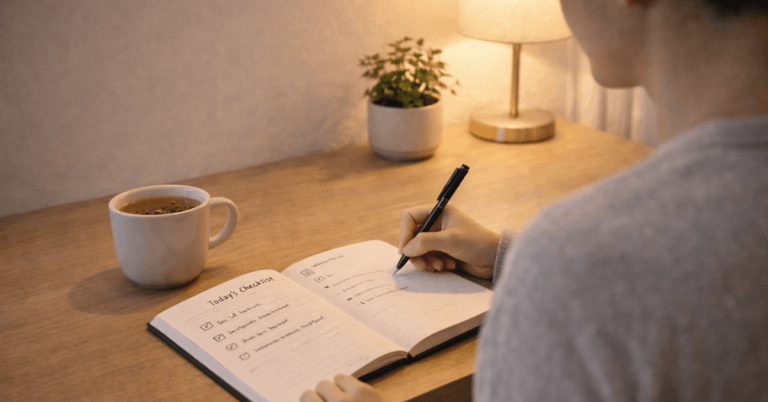
Daily habits shape how your mind feels and reacts across the day. Routines influence stress, energy, focus, and emotional balance.
This article explains the psychology of routines and why they matter. It also covers benefits, risks, and how to build a routine that fits real life.
Why Routines Matter for Emotional Health
Routines reduce guesswork, which lowers daily mental load. They create predictability that helps the brain feel safer.
They support steadier sleep, nutrition, movement, and social connection. Over time, that steadiness can make emotions easier to manage.
The psychology of routines and the brain
Your brain likes patterns because they save effort. Habits automate decisions and free attention for harder problems.
This is the psychology of routines, where repetition becomes efficiency.
Routine as an emotional “anchor” in uncertain days
A basic plan can ground you when everything else feels chaotic. Small repeated actions can signal stability to your nervous system.
That stability often makes big emotions less disruptive.
What routines do to stress and anxiety signals
Predictable steps can lower the feeling of being “behind” all the time. They can also reduce last-minute rushes that spike stress hormones.
When stress is lower, emotional reactions tend to be less intense.

Daily Routines and Mental Health: What Research Consistently Suggests
Daily routines and mental health are closely linked through consistency and recovery. Regular sleep and meal timing support mood regulation.
Structured days can improve follow-through and reduce overwhelm. For many people, routine becomes a simple tool for emotional stability.
How does having a routine help mental health in daily life
It helps by turning key tasks into defaults instead of debates. That reduces decision fatigue and protects attention and motivation.
So when you ask how having a routine helps mental health, the answer often starts with mental energy savings.
How does routine affect mental health through sleep quality
Sleep is one of the strongest mood levers you can control. Consistent wake and wind-down times support deeper rest.
When sleep improves, irritability and emotional sensitivity often drop.
How do routines help mental health with focus and self-control
A routine can create a “start line” for work, school, or chores. That start line reduces procrastination triggered by uncertainty.
With fewer delays, you often feel more capable and less stressed.
How Routines Shape Mood, Motivation, and Self-Worth
Mood often improves when your day has a clear rhythm. Motivation grows when you see progress repeated over time.
Routines can strengthen self-trust by proving you can follow a plan. That self-trust supports emotional health during tougher seasons.
Routines and mood stability across the day
Regular breaks can prevent emotional crashes from exhaustion. Balanced routines can reduce the “all-or-nothing” feeling in busy weeks.
When your day is paced, your mood usually swings less.
Motivation and the feeling of progress
Small wins repeated daily can build real confidence. Progress is easier to notice when actions are consistent.
This can protect against the hopeless feeling that comes from stagnation.
Identity and self-respect in routine building
Routines can reinforce the belief that you deserve care and structure. Showing up for yourself daily can improve self-worth.
That matters because self-worth affects how intensely setbacks hurt.
Importance of Daily Routine for Mental Health in Different Life Situations
The importance of daily routine for mental health increases when life feels unstable.
Transitions, pressure, and uncertainty make emotions harder to regulate. Routines can create a reliable base during change.
They also help you notice early warning signs when things slip.
During school, deadlines, and high-pressure seasons
A routine can protect sleep and meals when workloads spike. It can also create a predictable study or work window.
Predictability lowers panic and improves emotional control under pressure.
During loneliness, isolation, or low social contact
Routines can add planned connections through calls, walks, or group activities. They reduce empty time that can amplify anxious thoughts.
Even simple scheduling can make the day feel more supported.
During recovery from burnout or emotional exhaustion
A gentle routine can rebuild energy without pushing too hard. It can focus on basics like sleep, food, movement, and rest.
That slow rebuild often improves emotional resilience over weeks.
Negative Effects of Routine and When Structure Backfires
Negative effects of routine often appear when routine becomes rigid. Too much structure can feel like pressure instead of support.
Some routines can reduce spontaneity and increase guilt when missed. A helpful routine should guide you, not punish you.
When routine turns into perfectionism
Rigid schedules can make a normal slip feel like failure. That failure feeling can trigger anxiety, shame, or avoidance.
Perfectionism can turn routine into a source of stress.
When routines limit flexibility and joy
Over-structured days can crowd out play, rest, and creativity. This can make life feel repetitive and emotionally flat.
In that case, routine can contribute to low mood instead of stability.
When routine supports avoidance instead of growth
Some routines become comfort zones that block needed change. You might keep busy to avoid difficult feelings or conversations.
If routine hides problems, emotional health can worsen quietly.

How to Build a Routine That Supports Emotional Health
A good routine starts with what is realistic, not what looks impressive. It should match your energy, responsibilities, and personality.
The goal is stability with room to adapt. This is how routines help mental health long-term: they stay doable.
Start with “minimum viable” habits
Choose a few basics you can do even on hard days. Think sleep timing, one nourishing meal, and a short walk.
Small habits done often beat big habits done rarely.
Use cues and simple tracking, not complex systems
Link habits to existing actions like coffee, lunch, or shower time. Use a short checklist to notice patterns without judging yourself.
Tracking should inform choices, not create pressure.
Built in flexibility and recovery time
Add buffers so one delay does not break the whole day. Plan rest the way you plan work.
Flexibility reduces the stress that makes routines collapse.
Conclusion
Daily routines and mental health connect through reduced stress and stronger self-trust.
If you wonder how routine affects mental health, it often depends on whether your plan is flexible or rigid.
The importance of daily routine for mental health is highest when your basics are protected and your routine stays realistic.