Calm is not something that appears by accident, but something built through repeated choices during ordinary days.
Understanding daily habits to reduce stress helps transform calm from a temporary state into a stable baseline.
This article focuses on simple actions that support daily calm happiness without requiring drastic lifestyle changes.
Morning Habits That Set a Calm Tone
Morning routines influence emotional regulation for the rest of the day more than most people realize.
The way the day begins often determines how the mind reacts to stressors that appear later.
Intentional mornings support daily habits to reduce anxiety by preventing early mental overload.
A calm start creates psychological space before responsibilities begin to compete for attention.
Gentle Awakening Practices
Waking without rushing allows the nervous system to shift gradually from rest to alertness.
Avoiding immediate phone use reduces early exposure to stimulation and comparison.
This simple boundary is one of the most effective calming habits for emotional stability.
Simple Morning Organization
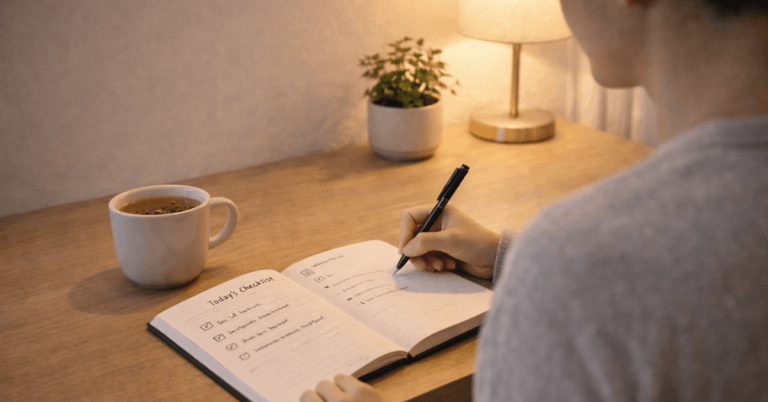
Preparing a short task list reduces decision fatigue before the day gains momentum. Clear priorities prevent mental clutter from forming early.
This practice supports calm habits by creating structure without pressure.
Daily Mental Organization for Emotional Balance
Mental organization directly affects emotional responses throughout the day.
Disorganized thoughts often feel like emotional overwhelm even when tasks are manageable.
Simple systems promote daily habits to reduce stress by creating predictability.
Order in thinking leads to calmer reactions under pressure.
Thought Capture and Release
Writing down concerns prevents repetitive mental looping. Externalizing thoughts gives the brain permission to rest.
This habit strengthens daily calm happiness by reducing internal noise.
Focused Single-Tasking
Doing one task at a time lowers cognitive strain. Multitasking increases stress hormones even during simple activities.
Single-tasking is among the most overlooked calming habits in modern routines.
Self-Care Habits That Support Emotional Stability
Self-care is not indulgence but maintenance for emotional health. Neglecting basic needs amplifies anxiety and irritability over time.
Daily self-care routines support daily habits to reduce anxiety in practical ways.
Consistency matters more than intensity when building emotional resilience.
Regular Nourishment and Hydration
Stable blood sugar supports steady mood regulation. Skipping meals often mimics anxiety symptoms in the body.
Simple nourishment routines reinforce calm habits naturally.
Brief Physical Movement
Gentle movement releases tension stored during prolonged sitting. Short walks or stretches calm the nervous system effectively.
Movement is one of the most reliable daily habits to reduce stress.
Evening Routines That Encourage Relaxation
Evening habits signal the brain to transition out of alert mode. Unstructured evenings often prolong mental stimulation unnecessarily.
Intentional wind-down routines support daily calm happiness before sleep.
Consistency in the evenings improves emotional recovery overnight.
Screen Reduction Before Bed
Reducing screen exposure lowers sensory stimulation. Dimmer environments help melatonin production begin naturally.
This practice strengthens calming habits without strict rules.
Gentle Reflection or Journaling
Brief reflection helps close mental loops from the day. Acknowledging progress reduces subconscious tension.
This habit reinforces daily habits to reduce anxiety before rest.
Sleep Habits That Restore Emotional Calm
Sleep is the foundation of emotional regulation. Poor sleep amplifies stress responses regardless of daytime habits.
Protecting sleep quality supports all calm habits practiced during the day. Restorative sleep creates emotional resilience for future challenges.
Consistent Sleep Timing
Regular sleep schedules stabilize circadian rhythms. Predictability helps the nervous system feel safe.
This is one of the most effective daily habits to reduce stress.
Calm Pre-Sleep Environment
Quiet, uncluttered spaces reduce sensory input. Comfortable surroundings signal rest readiness.
This environment supports daily calm happiness through better sleep quality.
Emotional Routines That Build Long-Term Calm
Emotional habits determine how feelings are processed rather than suppressed. Ignoring emotions often leads to delayed stress reactions.
Healthy emotional routines strengthen daily habits to reduce anxiety sustainably. Calm grows when emotions are acknowledged without judgment.
Naming Emotions Clearly
Identifying emotions reduces their intensity. Clear labeling activates rational processing.
This practice supports calming habits by reducing emotional confusion.
Allowing Emotional Pauses
Pausing before reacting prevents impulsive responses. Short emotional check-ins build self-awareness.
This routine reinforces calm habits over time.
Social Habits That Protect Emotional Peace
Social interactions influence emotional balance more than many daily routines. Overexposure to draining conversations increases stress accumulation.
Intentional social boundaries support daily habits to reduce stress. A healthy connection should energize rather than exhaust.
Selective Social Engagement
Choosing quality interactions over quantity preserves emotional energy. Limiting overstimulation helps maintain balance.
This habit promotes daily calm happiness naturally.
Clear Communication Boundaries
Expressing limits reduces resentment. Healthy boundaries prevent emotional overload.
This practice strengthens daily habits to reduce anxiety in relationships.
Building Calm Through Consistency
Calm is built through repetition, not perfection. Small habits practiced daily create lasting emotional stability.
Consistency transforms calming habits into automatic responses. Over time, calm becomes the default rather than the exception.
Tracking Calm-Promoting Habits
Awareness encourages habit reinforcement. Tracking progress increases motivation gently. This supports daily habits to reduce stress sustainably.
Adjusting Without Pressure
Flexibility prevents guilt when routines shift. Calm thrives under self-compassion. This mindset strengthens daily calm happiness long-term.
Pros and Cons of Practicing Daily Habits That Promote Calm
| Pros | Cons |
|---|---|
| Supports emotional regulation by lowering baseline stress levels over time | Requires consistency, which can be challenging during busy or unpredictable days |
| Helps build daily habits to reduce anxiety without relying on medication or drastic changes | Benefits are gradual, not immediate, which may discourage some users |
| Improves sleep quality by calming the nervous system before rest | Some habits need intentional planning, especially in the beginning |
| Encourages better mental organization and reduced cognitive overload | Initial habit setup may feel overwhelming for people already stressed |
| Promotes daily calm happiness through predictable routines | Results vary depending on personal lifestyle and stressors |
| Strengthens self-awareness and emotional resilience | Can feel repetitive if not adjusted periodically |
| Easy to adapt and personalize based on individual needs | External disruptions (work, family, environment) can interfere |
| Low-cost or free practices with long-term benefits | Progress may stall without reflection or adjustment |
| Helps prevent burnout rather than only reacting to it | Some habits may conflict with existing schedules |
| Encourages healthier responses to stress instead of avoidance | Requires patience and self-compassion to maintain |
Conclusion
Daily calm is not achieved through one dramatic change. It grows from consistent, manageable actions repeated over time.
By practicing daily habits to reduce anxiety and protect emotional energy, calm becomes easier to access.
Start with one routine today and allow calm to build naturally into your daily life.