You do not need a full lifestyle reset to feel better. Small daily actions that improve well-being work because they fit real schedules. When you repeat tiny choices, your mood and energy stay steadier.
This guide shares simple habits for sleep, stress, and daily routines. Each step includes apps, tools, and resources for support. Pick one action and keep it for a week.
If you have health concerns, adjust the ideas to your needs. Consistency matters more than perfection.

A Two-Minute Morning Reset That Keeps Your Day Steady
A steadier day often starts with a steadier first hour. You are building a repeatable starting point, not a perfect morning routine.
Think in two-minute blocks that fit between normal tasks. A tiny pause reduces reactive choices and keeps you on track.

When you wake up late, do the smallest version and move on. That approach makes the habit easier to keep every week.
Do A 30-Second Mood Check-In Before You Open Apps
Before you open any app, take thirty seconds to notice your state. Name one emotion and one need, so you act with less reactivity. For guided practice, Smiling Mind offers short mindfulness sessions for beginners.
If writing helps, Journey lets you capture one sentence and clear mental clutter. Keep it brief, because long sessions are easier to skip. Over time, this check-in makes mornings feel more controlled.
Write A One-Line Plan For The Next Two Hours
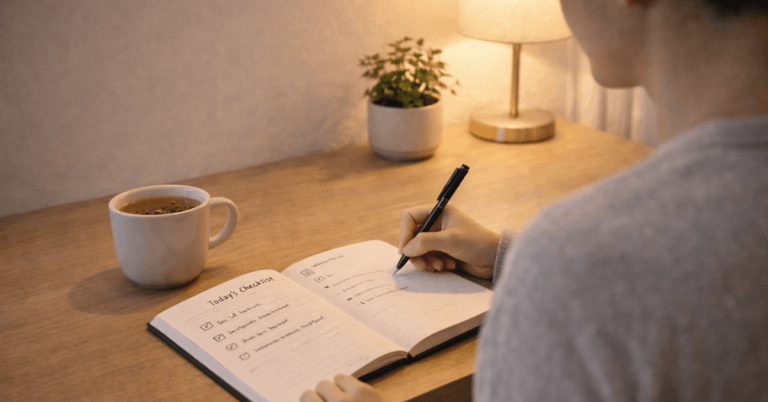
Write a one-line plan for the next two hours, not the whole day. Pick one priority and one quick win so planning stays practical. Google Keep works well for fast notes and checklists across devices.
Twos is another option if you want tasks and reminders together. Keep the list short enough to finish so you trust your system. When the block ends, reset the plan instead of adding more.
A Five-Minute Tidy Loop That Makes Your Home Feel Calmer
Your space affects your mood, especially when stress is high. Use short tidy loops to create a clean-enough baseline at home.

Skip the deep clean and focus on the spots you see all day. Choose one or two hot spots that annoy you most.
Short loops prevent overwhelm and help you restart tomorrow. When the timer ends, stop and enjoy the visible change you earned.
Reset One Surface Every Day For Fast Visual Relief
Pick one surface that collects piles, like a counter or desk. Set a five-minute timer and reset it for high-impact decluttering. Forest can help you stay off distracting apps while the timer runs.
Work left to right so you do not bounce between items. When five minutes end, stop even if it is not perfect. Repeat the same surface daily until it feels automatic.
Use A One-Container Rule For Hot Spots Like Keys And Mail
Use a one-container rule for hot spots like mail, keys, or chargers. The container creates a limit, which supports faster decisions. Run a short Pomodoro with Pomofocus and sort only that container.
Keep what belongs there and move the rest to its home right away. When the container is full, do a quick reset instead of adding storage. This boundary keeps clutter from spreading across the room.
Apply A One-Touch Finish To Stop Clutter From Multiplying
Use a one-touch finish for items that take under thirty seconds. Hang the jacket, file the paper, or rinse the mug to stop clutter creep. If you work at a computer, RescueTime Focus Sessions can block distractions during resets.
Do the task right away instead of creating a new pile. Apply the rule to the same items daily for better results. Soon, your home will stay steadier with less effort.
Simple Food And Water Defaults That Support Daily Energy
Energy dips often come from skipped basics like water and simple meals. Choose simple defaults that require almost no thinking on busy days.

Defaults help when your schedule is full, and willpower is low. Start with one hydration cue and one anchor meal you already eat.
If you have medical needs, use these ideas as general guidance. Small nutrition habits support steadier moods by reducing daily strain.
Set Up A Visible Water Cue You Cannot Miss
Keep a filled bottle where you see it and sip when you pass. This is a visible habit design because the cue reminds. Cleveland Clinic notes needs vary, so regular sipping can beat rigid rules.
Tie sips to routines like meals, meetings, or bathroom breaks. If plain water is hard, add lemon or choose water-rich foods. Aim for consistency instead of chasing a perfect daily number.
Build One “Anchor Meal” That Is Easy To Repeat
Choose one daily meal as your anchor and improve it first. Add a fruit or vegetable and a protein for repeatable nutrition. The USDA Start Simple with MyPlate app supports simple food goals and tracking.
Keep ingredients easy, like yogurt, eggs, beans, or pre-washed greens. A steady anchor meal reduces stress because you start from a good base. Most days, better is enough to build momentum.
Mini Movement And Breathing Breaks That Lower Stress Fast
Stress builds when your body stays tense and still for too long. Movement and breathing breaks are fast levers for focus and mood.

You do not need a gym or special gear to benefit. Pick actions that fit between tasks, like a short walk or a breathing reset.
If you have pain or limits, adjust intensity and choose safe options. The payoff comes from repeating small steps, not big ones.
Take A Ten-Minute Walk That Has A Clear Start And Stop
Take a ten-minute walk with a start and stop, like after lunch. A walk gives reliable stress relief and breaks up long sitting. The American Heart Association recommends 150 minutes per week of moderate activity.
The CDC also recommends weekly movement and muscle strengthening on most days. Keep the pace comfortable so you do not dread it. If you miss a day, restart tomorrow without trying to catch up.
Use A One-Minute Breathing Reset When Stress Spikes
When stress spikes, pause for one minute and slow your breathing. This creates a repeatable pause that interrupts racing thoughts quickly. Breathe2Relax can guide diaphragmatic breathing when you want structure.
If sound helps, Endel offers adaptive soundscapes for relaxation and focus. Use the break at your desk, in the car, or while waiting in line. You are training your body to downshift safely, then return to the task.
Replace One Scroll Session With One Focus Block
Replace one scrolling session with one focused block each day. Use a 25-minute timer so focus feels achievable. Pomofocus is a simple browser timer that needs almost no setup.
Cold Turkey can block websites and apps if you need stronger boundaries. Choose one task you can finish in one block to create a clear win. A visible win lowers stress and makes tomorrow easier to start.
A Simple Night Routine That Protects Sleep
Sleep is the habit that makes every other habit easier to keep. Build a simple path to bedtime instead of a long routine, and you will quit.

Start with a screen-down buffer and a few consistent cues. Keep your bedroom setup steady so you make fewer late-night decisions.
If sleep is a long-term struggle, consider professional support. Better sleep often follows better consistency, not more effort.
Create A 30-Minute Screen-Down Buffer Before Bed
Create a 30-minute screen-down buffer before bed and protect it. This is low-cost and high-return because screens keep the brain alert. MedlinePlus recommends consistent schedules and removing distractions like phones.
Sleep Education from the American Academy of Sleep Medicine explains practical sleep hygiene. Swap screens for a shower, stretching, or a paper book. If you slip, restart the buffer the next night and keep going.
Make Your Bedroom A Low-Decision Zone
Set up your bedroom so the easiest choice is to sleep. Dim lights early, lay out pajamas, and reduce noise for fewer wake-up triggers. MedlinePlus highlights removing distractions and keeping routines steady across the week.
If you like sound, Endel offers sleep-focused soundscapes you can use as a cue. Keep the setup minimal so it does not become another project. A supportive room saves energy when you are already tired.
Track Sleep Lightly And Change Only One Thing
Track sleep lightly for a week, then change only one variable. Use data with curious tracking, not self-criticism. SleepScore describes phone-based tracking and coaching to understand your sleep.
RISE focuses on sleep debt and timing to support better schedules. Pick one change, like a consistent wake time, and test it for seven days. If tracking increases anxiety, stop and return to simple routine cues.
Conclusion
Well-being improves when actions become your default each day. Small daily actions that improve well-being stay powerful because they are repeatable. Start with one habit that reduces stress or friction and keep it for a week.
Use apps and tools only when they make the action simpler. When you miss a day, restart without penalties or dramatic resets. Over time, small choices stack into routines that feel steady.