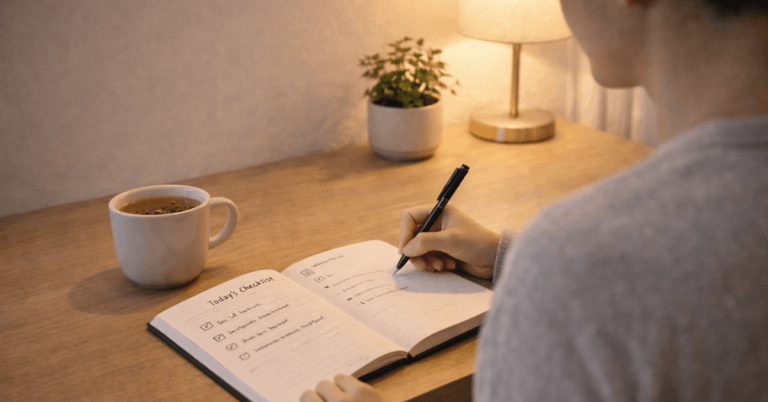
Most people do not fail at habits because they lack discipline. This guide on how to simplify daily habits shows you how to reduce effort and make routines easier to repeat.
You will focus on fewer actions that deliver more stability for mood, energy, and sleep. The goal is a routine that fits real schedules and low motivation days. You will use simple defaults, smaller habit versions, and one clear task system.
You will also learn how to protect sleep without turning it into a project. If you want steady progress, start here and keep it simple.

Start By Cutting Daily Decisions At The Source
When your day feels complicated, it usually starts with too many choices. Simplifying daily habits begins by turning common decisions into defaults you can repeat.
That means fewer options for mornings, meals, and basic self-care steps. Defaults reduce mental fatigue because you stop negotiating with yourself.

Your goal is not to optimize every detail, but to reduce friction. Routine can support this approach by guiding a short, repeatable sequence.
Pick Two Default Morning Actions You Never Negotiate
Choose two actions that happen every morning, no matter what. For example, drink a glass of water and open a window for fresh air. Keep them simple so they work on busy days and low-energy days.
Place what you need in the same spot so you do not search. Two defaults create momentum because you start the day with a win. Once these are stable, you can add one more later.
Create A Same Time, Same Place Rule For One Habit
Pick one habit you do at the same time in the same location each day. It might be taking vitamins after brushing your teeth or stretching beside your bed. This removes planning and makes the habit feel automatic.
Use a visible cue, like placing the item where your hands already go. Consistency beats intensity because repetition builds trust in your routine. If the timing breaks once, return the next day without resetting everything.
Use A Short List Of Non Negotiables For Busy Days
Create a short list of three non-negotiables you do even on hard days. Keep them basic, like hydration, one small meal upgrade, and a short walk. Avoid long lists that make you feel behind before you start.
Write the list where you can see it quickly. Your minimum routine matters because it keeps you from slipping into all-or-nothing thinking. When life gets chaotic, your minimum keeps you steady.
Use Routinery To Turn Defaults Into Autopilot
Routinery can help by timing your routine and guiding each step in order. Set a short morning sequence like water, light exposure, hygiene, then a two-minute stretch. Keep the routine under ten minutes so it stays realistic.
Use the same sequence daily so your brain comes to expect it. A guided flow reduces procrastination by stopping you from deciding what comes next. If you miss a day, restart without editing the routine.
Make Habits Smaller, So They Are Easier To Start
Habits feel hard when they look too big in your head. Simplifying daily habits often means shrinking the starting point, not lowering your standards.

You build momentum by doing the smallest version first, then expanding when it feels natural. Small habits still count because they protect consistency and self-trust.
This approach supports emotional well-being because it reduces guilt and pressure. Fabulous can guide micro steps when you want structure without complexity.
The Two Minute Version That Still Counts
Create a two-minute version of the habit you want to build. If you want to exercise, do two minutes of movement instead of a full workout. If you want to journal, write one sentence that names your mood.
Keep it so easy you can do it even when tired. Starting is the real hurdle because once you begin, you often keep going. If you stop at two minutes, you still succeeded.
Habit Stacking Without Overloading Your Schedule
Habit stacking works when you stack one small action after an existing action. For example, after you make coffee, you take three slow breaths. After you wash your face, you apply moisturizer and drink water.
Do not stack five new actions at once, as they collapse under stress. One stack at a time keeps the routine stable and prevents burnout. When one stack feels automatic, add the next.
Use a Start-Only Rule To Beat Avoidance
Many people avoid habits because the full version feels intimidating. Use a start-only rule where the goal is simply to begin. You tell yourself you will open the document, put on your shoes, or set up your skincare items.
Once you start, you can decide whether to continue. Starting breaks resistance because it turns a vague goal into a physical action. This reduces avoidance and keeps your habits alive.
Use Fabulous To Build Micro Steps That Stick
Fabulous supports habit building by guiding small routines and daily prompts. Choose one routine path and keep it focused on a single goal, like morning energy or better sleep. Use reminders that match your real schedule instead of ideal timing.
Keep the steps minimal so you do not skip them. Guided structure can reduce overwhelm when you are rebuilding habits from scratch. Review progress weekly and adjust one step, not the whole plan.
Keep Your Day Organized With One Simple Task System
Daily habits get harder when your mind is full of unfinished tasks. A simple task system reduces mental clutter and frees energy for self-care and sleep.

The goal is one place to capture tasks, then one short review to keep them moving. A single system lowers stress because you stop relying on memory.
Keep it lightweight, not a complex productivity setup. Todoist works well for fast capture and recurring routines.
Capture First, Organize Later To Avoid Stress
When a task appears, capture it immediately in one place. Do not decide priority or timing in the moment, because that increases friction. Use short, clear task titles that tell you the next action.
Add links or notes only when they prevent confusion later. Capturing stops mental looping because your brain no longer has to hold it. You will feel calmer because tasks live outside your head.
One Daily Review That Stops Backlog Growth
Set one daily review time that lasts five minutes. During the review, choose what you will do today and reschedule what cannot happen. Keep the list short so you stay realistic and avoid shame.
If something has lingered, either break it into a smaller step or delete it. A daily review protects clarity because it prevents the slow buildup of unfinished tasks. This habit supports emotional well-being by reducing background stress.
A Clean Priority Rule For What Gets Done Today
Use a simple priority rule that keeps decisions easy. Choose one main task, two supporting tasks, and one quick admin task for the day. If your day changes, you only adjust that short set.
Avoid adding extra tasks as a way to feel productive. A short daily plan works because it matches real capacity and reduces frustration. When you finish early, you can add one more, not five.
Make Sleep Support A Simple Habit, Not A Big Project
Sleep is where daily habits either recharge or fall apart. If your sleep is inconsistent, everything feels harder, and emotions run hotter.

Simplifying habits includes making sleep support automatic and low effort. Sleep consistency protects energy and helps you recover from stress without extra coping strategies.
You do not need perfect sleep hygiene; you need repeatable cues. Rise Sleep can help by showing sleep debt and guiding realistic timing.
A Ten-Minute Wind Down That Takes No Planning
Create a ten-minute wind-down that you can repeat every night. Keep it the same order, like dim lights, wash face, prepare water, then a quiet activity. Avoid adding tasks that feel like chores, because that increases resistance.
Use a reminder so you do not start too late. A short wind-down cues recovery because your body learns what comes next. When the cue is consistent, sleep becomes easier.
A Nighttime Plan For Overthinking
Overthinking at night often comes from unresolved tasks and emotional buildup. Use a plan that reduces thinking instead of fighting it. Write down worries in one list, then write one next step for tomorrow.
Keep the lights low and avoid checking messages or news. A worry list creates closure because your brain stops trying to remember everything. If thoughts return, repeat one calming breath pattern and return to rest.
A Wake Time Anchor That Stabilizes Rhythm
Choose a wake time anchor and protect it on most days of the week. A consistent wake time helps your body set a natural bedtime. If you slept badly, avoid sleeping in too long because it can affect your sleep the next night.
Keep naps short and early so they do not steal nighttime sleep. A stable wake time reduces sleep drift and improves daily energy. With consistency, your routine starts to feel easier.
Conclusion
Simplifying habits is less about doing more and more and more about doing the right things consistently. This guide on simplifying daily habits showed how defaults, smaller habit versions, and a one-task system reduce stress.
Keep your minimum routine protected so hard days do not erase progress. Review weekly, change one small thing, and stay steady. Your habits will feel easier because they finally fit your life.