Wellness advice fails when it ignores schedules. If you are learning how to keep healthy habits simple, start with actions you can repeat when tired.
Small routines steady mood and sleep by making decisions. You do not need an overhaul or strict rules. You need a baseline that fits your life.
This article covers food, movement, mental offload, sleep, and prompts. Each section includes one tool that supports follow-through.

Start With One Habit That Protects Your Energy
When habits feel complicated, your energy drops, and your choices get worse. Start with meals because stable fueling supports emotions and attention.
MyFitnessPal can help you notice patterns without turning eating into a project. The aim is steady energy across the day, not perfect nutrition.

Keep meals simple and repeatable, even on busy days. Once you stop running on empty, other habits feel easier to keep.
The Two Minute Food Check That Prevents Skipping Meals
Before your day speeds up, take two minutes to check your next meal. Skipping food often shows up later as cravings and irritability. Open MyFitnessPal and log a quick plan, even if it is a rough note.
This creates a small checkpoint that reduces decision fatigue. If planning feels hard, choose one snack and one drink today. You are building reliability, not a detailed menu.
A Low Effort Hydration Rule You Can Repeat
Hydration stays simple when the rule is tied to routine. Pick two anchors, like after waking and with lunch, then stop thinking about it. If you track water in MyFitnessPal, keep it light and quick.
Place a bottle where you will see it, and drink before you scroll. If you forget, refill the bottle when you notice. Small consistency beats chasing a perfect daily target.
A Backup Meal Plan For Busy Days
Busy days are when habits collapse, so you need a backup meal. Choose one option you can make fast, like oats, eggs, or a bowl of rice. Stock the ingredients and keep the steps the same.
Save it in MyFitnessPal so logging takes seconds today. When you feel overwhelmed, default to the backup instead of skipping food. That choice protects mood and reduces late snacking.
Use Tiny Movement That Does Not Feel Like Exercise
Movement is easier to keep when you stop treating it like training. The goal is short bursts that reduce tension and support sleep.

Nike Training Club works well because you can choose sessions that fit your energy. Aim for daily movement cues instead of long workouts you dread.
When you move a little, your mood steadies and your mind feels clearer. That makes your other habits feel more doable.
The Ten-Minute Walk Habit That Fits Anywhere
A ten-minute walk fits between tasks and still shifts your mood. Attach it to a cue, like after lunch or after a meeting. If you want structure, start a short Nike Training Club warm-up, then head out.
Keep the pace comfortable so it stays easy to repeat. If you miss a day, restart the next day without negotiating. Over time, walking becomes a reliable stress release.
A Desk Stretch Routine You Will Actually Do
Sitting builds tension in your body, and it can feel like anxiety. A short stretch routine reduces discomfort and improves focus without disrupting your day. Open Nike Training Club and choose a short mobility session.
Do it at the same time daily, so it becomes automatic. Notice where you hold stress, then release one area at a time. The payoff is steadier attention and fewer aches by evening.
An Evening Mobility Reset That Supports Sleep
Evening movement should calm you, not wake you up. Choose gentle mobility or a slow flow that reduces restlessness. Nike Training Club has recovery sessions that guide you without much thinking.
Keep it to ten minutes and stop before it turns into a workout. Pair it with a shower so bedtime feels consistent. A calm reset supports better sleep quality with little extra effort daily.
Simplify Your Mind With One Daily Offload
Mental clutter makes habits harder as your brain renegotiates the basics all day. An offload gives tasks a place to live outside your head.

Google Keep is useful because capture is fast and searchable. The goal is less mental noise, not productivity pressure.
When thoughts are organized, it is easier to choose food, movement, and rest. This habit helps evenings feel calmer and less rushed.
The Three Line Brain Dump
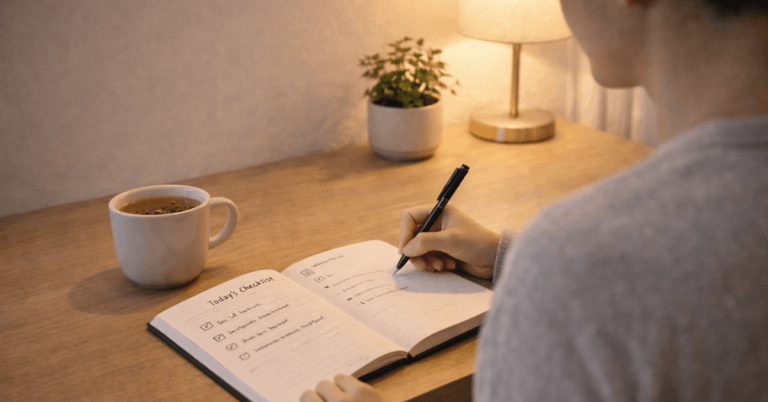
A brain dump works best when it stays short. Open Google Keep and write three lines: what worries you, what needs doing, and one next step. This prevents a long list that drains you over time.
Do it before dinner so worries do not follow you to bed tonight. Keep the language plain, then close the note. The purpose is quick relief, not perfect planning.
A Single List For Recurring Tasks
Recurring tasks drain you when they pop up at random times. Create one list in Google Keep for basics, like refilling water or prepping a snack. Check it once per day, then close it and return to your life.
This reduces decision fatigue because you stop reinventing the routine. Keep the list short, around five items, so it stays readable. A tight list creates automatic momentum instead of reminders.
The Tomorrow Only Rule For Planning
Overplanning can increase stress when it feels useful. Use a tomorrow-only rule so planning stays actionable. In Google Keep, write no more than three items for tomorrow, then stop.
If something is big, write one next step and leave the rest for later. This protects evenings and helps you shut down. The rule builds clarity without pressure and keeps habits from becoming a workload.
Build A Sleep Routine That Survives Busy Weeks
Sleep is the habit that protects emotional regulation, appetite, and patience. When sleep drifts, other routines usually break first.

Your goal is a simple routine that works even when evenings run late. Sleep Cycle can help you notice trends in bedtime drift and morning energy.
Treat tracking as feedback, not as a grade. A stable routine becomes your best multiplier because it makes every other habit easier to hold.
A Consistent Wake Time Rule
A consistent wake time trains your clock better than a strict bedtime. Choose a wake time you can keep, weekends included. This reduces the Sunday night problem, where you cannot fall asleep.
In Sleep Cycle, set a wake window and keep the alarm soft. If you slept poorly, still wake close to the target and get light. The habit works because timing stays predictable over weeks.
A Two-Step Winddown You Can Maintain
A wind-down routine should be short enough to survive real life. Choose two steps you can repeat, like lowering lights and quick hygiene. Add one calm cue, like quiet music or brief breathing.
In Sleep Cycle, set a reminder so the routine starts on time. Keep screens out of the last part of the routine when possible. The point is lower stimulation, not perfection.
A Bad Night Recovery Plan
Bad nights happen, and the response matters more than the cause. Keep wake time close to normal, then get light and movement to rebuild sleep pressure. Avoid long naps that steal sleep from the next night.
In Sleep Cycle, note what happened, such as stress or late caffeine. Choose one fix for tonight, not five fixes. Recovery stays simple and forgiving when you follow a plan.
Make Habits Stick With Environment And Prompts
Motivation is unreliable, so your environment has to carry the habit. Prompts reduce fatigue by nudging you when you can act.

The key is fewer cues, not more, so you do not tune them out. Streaks works because it tracks a small set without turning life into numbers.
Use it to reinforce consistency while keeping goals flexible. Set up wins because the path stays visible on hard days.
One Visible Cue Per Habit
Pick one visible cue for each habit and make it obvious. Put a water bottle on your desk or by the door. In Streaks, set one reminder tied to that cue, not a random time.
This makes habits easier because the cue triggers action without extra thought. Keep the cue area clean so it does not blend into clutter. A simple cue system feels calm and doable.
How To Prevent All Or Nothing Thinking
All-or-nothing thinking breaks habits because it turns small misses into quitting. Set a minimum that counts, like one healthy meal or five minutes of movement. Track the habit in Streaks only when you meet the minimum, not the perfect version.
This protects motivation because your standards stay realistic. Review weekly and adjust the minimum if it feels too hard. The goal is steady progress, not flawless execution.
Conclusion
Healthy habits last when they stay simple through real life. Start with meals, add movement, and offload mental clutter. Protect sleep with a consistent wake time and a short wind-down.
If you miss a day, restart without drama and keep the next step small. Over time, consistency becomes your advantage, and your well-being steadies.