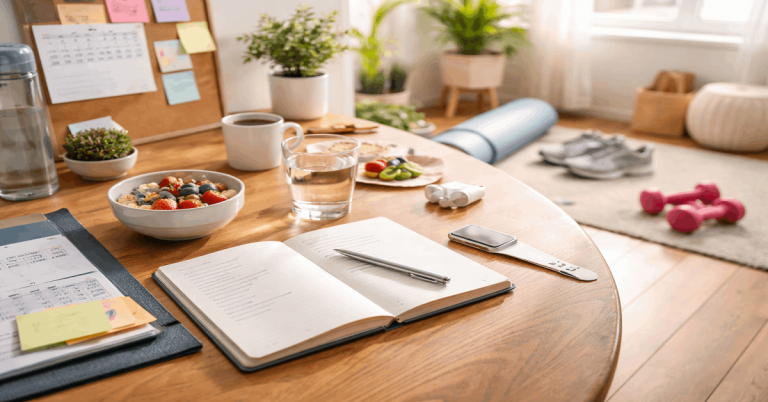
Creating a balanced daily routine isn’t just about strict schedules or following the latest productivity hacks. It’s about finding what genuinely works for you—a mix of healthy habits, mental clarity, and self-care that helps you feel in tune with your own needs.
Honestly, I think a lot of us feel off-balance when life gets hectic. This guide is for anyone who wants more steadiness in their days, whether you’re managing work, home, school, or simply aiming for more emotional well-being. By the end, you’ll understand the essentials of crafting a daily rhythm that supports both your mind and body.
Why a Balanced Routine Matters
There’s something comforting about knowing what to expect from your day. A balanced routine can dramatically affect your mental and emotional stability . Personally, on days when my routine slips, I notice my mood and focus decline.
But sticking to a plan (even a flexible one) often leaves me feeling more in control—maybe not every problem disappears, but things definitely feel more manageable.
Reducing Stress and Overwhelm
Organized days can help limit that bubbling feeling of overwhelm. If you consistently wake up unsure what comes next, stress tends to grow. A daily routine helps create predictability, which is calming even if you don’t admit it aloud.
Promoting Healthy Habits
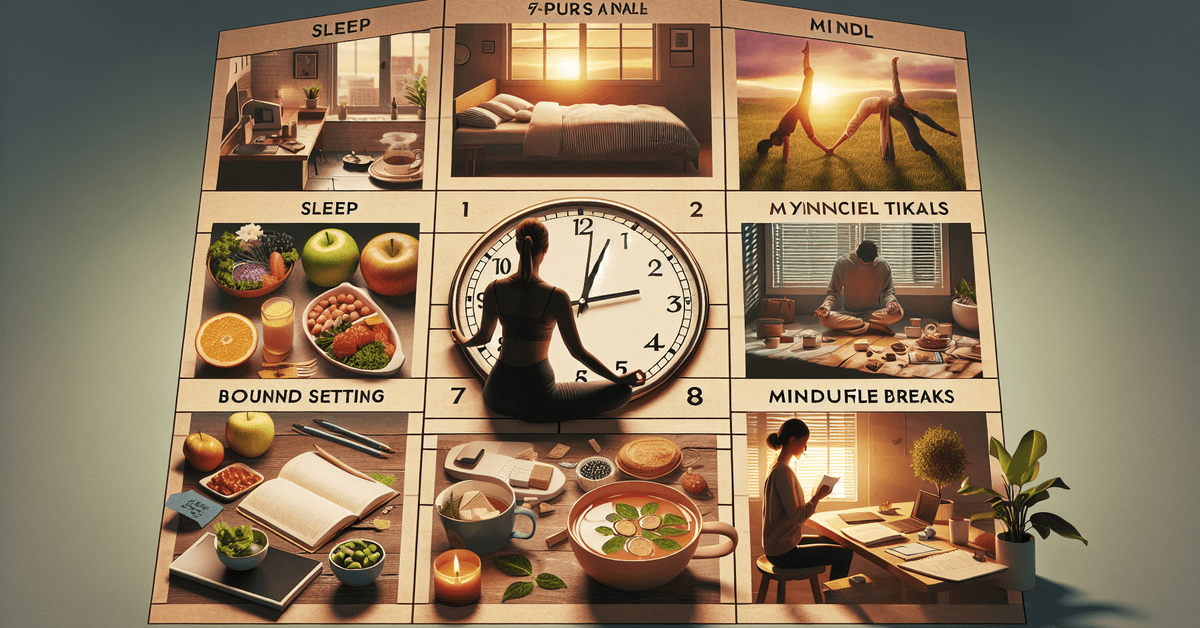
Routine is also crucial for building healthy habits—you’re much more likely to stick with a self-care or exercise habit if it fits somewhere in your day, not just tossed in when you remember (I’ve tried “winging it,” and let’s just say it rarely works for long-ish periods).
Key Elements of a Balanced Daily Routine
Let’s break down what generally makes up an effective daily routine. Not everyone’s ideal schedule will look the same, and that’s okay. It’s all about balance—not perfection.
1. Consistent Sleep
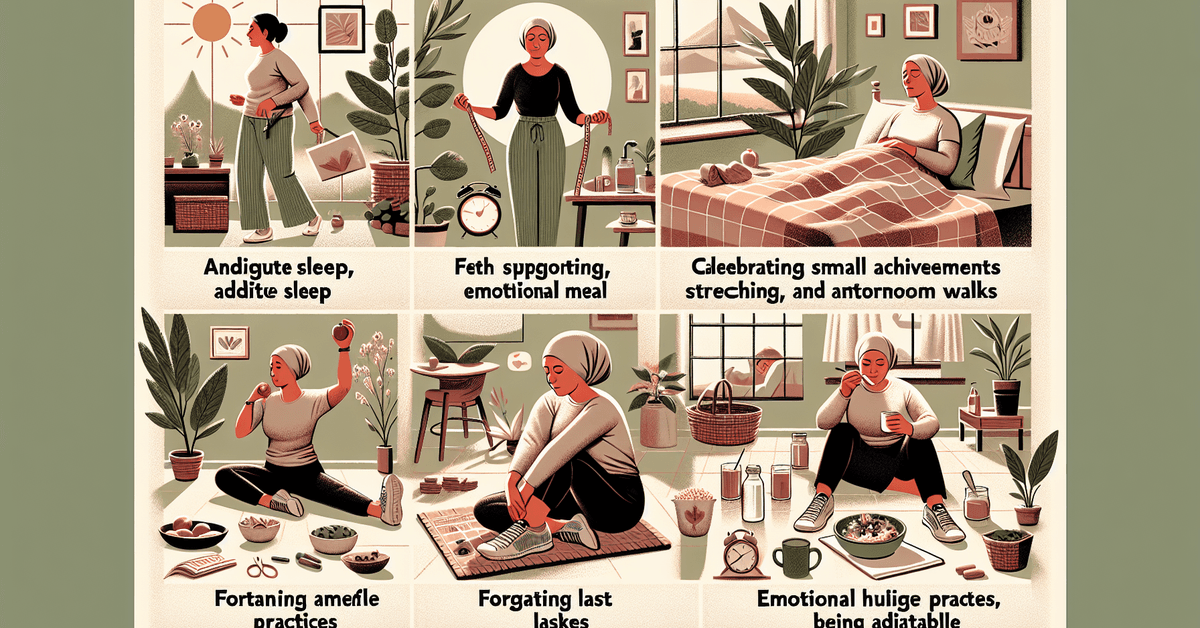
If there’s one habit that impacts everything else, it’s sleep . Adults should aim for 7-9 hours of rest. Try a simple sleep routine—perhaps setting a wind-down alarm or creating a calming pre-bed ritual.
2. Nourishing Meals
Regular, balanced meals help keep your energy levels steady . Skipping breakfast sometimes seems harmless, but I always feel the dip in focus later. Planning simple, healthy meals makes a huge difference, especially if you pair it with mindful eating.
3. Physical Activity
Movement doesn’t need to mean the gym. A walk, stretching, or even dancing around the living room—what matters is consistent, enjoyable activity. Scheduling it—even loosely—can help you actually follow through.
4. Mindful Breaks
Short breaks in your day aren’t wasted time. Quick pauses for deep breaths, staring out the window, or listening to a favorite song can recharge you more than endless multi-tasking. Personally, I’ve only realized this after pushing through to burnout a few too many times.
5. Emotional Check-Ins
How often do you ask yourself, “How am I doing?” Scheduling moments for reflection, journaling, or just checking in with your feelings can foster better self-awareness—and that’s a big part of emotional well-being.
How to Build Your Personal Routine
I know starting from scratch can feel a bit intimidating. The trick is to begin small and expect some trial and error along the way (I’ve rebuilt my routine more times than I can count). Here’s a step-by-step approach:
- Identify your priorities: What matters most each day? Health, productivity, family time, relaxation?
- Start with anchors: Pick 2–3 key times—like wake-up, lunch, bedtime—then gradually fill in the spaces between.
- Stack new habits: Attach new routines to established habits (e.g., meditate right after brushing teeth).
- Leave room for flexibility: Life isn’t perfectly predictable. Make room for unexpected events without losing core structure.
Here’s a simple table to help visualize:
| Time | Activity |
|---|---|
| 7:00am | Wake up, light stretching |
| 8:00am | Healthy breakfast |
| 12:30pm | Midday walk |
| 3:00pm | 10-min mindful break |
| 6:30pm | Family dinner |
| 9:00pm | Journaling and unwind |
Tips for Sticking with Your Routine
Even the most thoughtfully designed routine won’t always go as planned. It can be tough to keep going, especially on rough days. Here are some things that have helped me, and maybe they’ll help you too:
- Start easy: Set small, achievable habits first
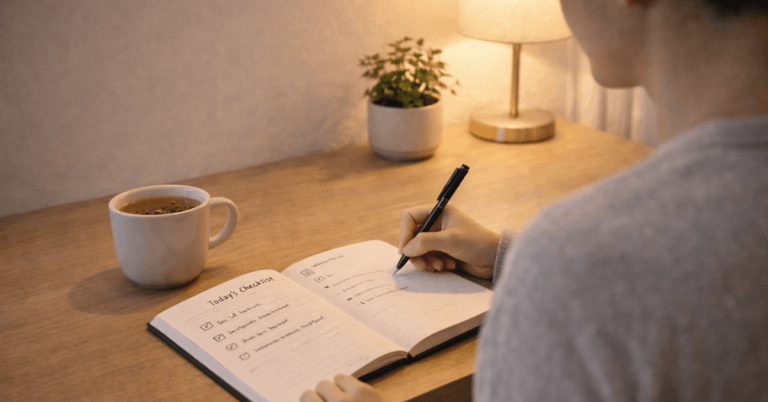
- Celebrate small wins: Track progress with a checklist or journal
- Be forgiving: Missing a day isn’t failure—just pick up again tomorrow
- Adjust as needed: Sometimes you need to pivot—listen to your body and mind
Self-Care and Emotional Hygiene
Including self-care in your routine isn’t indulgent—it’s essential. Whether it’s a daily walk, quiet reading, or a cup of tea, these moments can buffer stress. And emotional hygiene (like setting boundaries, saying no, or practicing gratitude) becomes easier when it’s part of your normal rhythm.
Curious for more? Check out our guide on essential self-care habits or explore helpful resources from Mind.org.uk’s Wellbeing pages for expert-backed tips.
Sample Daily Routine for Emotional Well-Being
While your ideal routine will be unique, here’s a sample you might adapt. Feel free to change times, swap activities, or leave things a little open-ended—whatever feels right.
- Morning: Wake up, stretch, have a nourishing breakfast, set a gentle intention for the day
- Midday: Step outside for fresh air, connect briefly with a friend or colleague, practice mindful breathing
- Afternoon: Healthy snack, short walk, wrap-up tasks and mentally close your “work” tab
- Evening: Unplug from screens early, enjoy a calming activity, journal or reflect (if that’s your thing), prepare for restful sleep
Making Balance Sustainable
No routine will be perfect—some days are just too unpredictable. But consistency (not rigidity) is what brings real results. If things start to feel stale, refresh your routine.
Add variety, mix up your exercise, or swap evening activities for something fun and light. Sometimes, the tiniest adjustments create the biggest mood boost—and that’s really the heart of a healthy day.
Conclusion: Build Your Best Day, Bit by Bit
In the end, crafting a balanced daily routine is really about self-knowledge. Notice what lifts you up, and make space for those things. Don’t pressure yourself for perfection.
Each attempt is progress, and your future self will thank you for every small step. Ready to get started? Download our free healthy habits checklist and try building your own routine today!