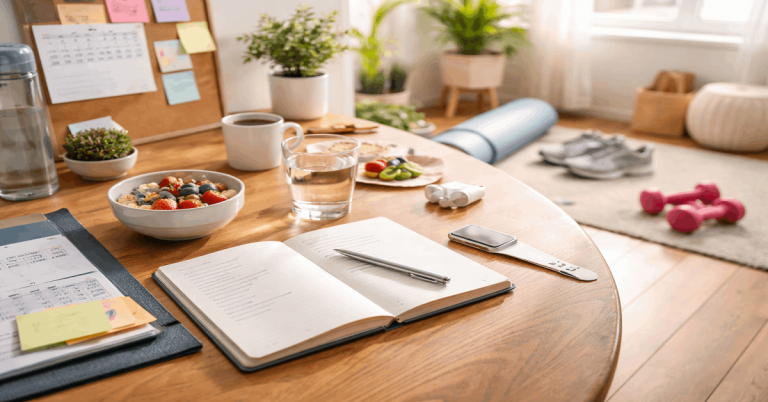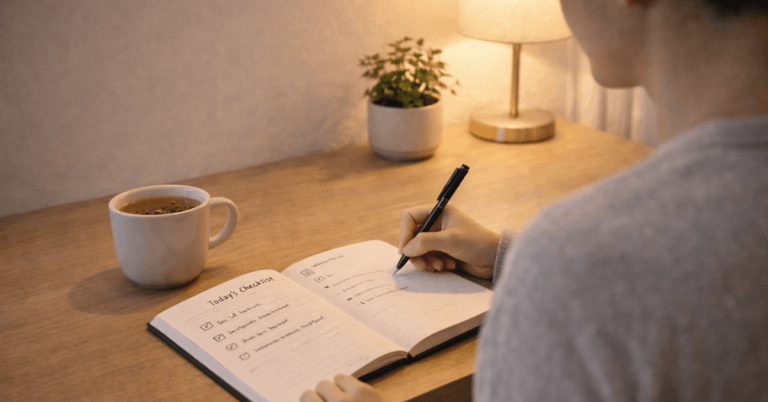
Stress can feel like it is everywhere, from notifications to deadlines to daily responsibilities. If you want simple habits that reduce daily stress, the best approach is to start small and build step by step.
This article uses a minimal habit ladder, so you can begin with 1-minute resets and move up only when ready. You do not need a new personality or a perfect routine. You need habits that work on busy days and tough days.
Each level includes practical options that support emotional well-being. Pick what fits your life and repeat it consistently.
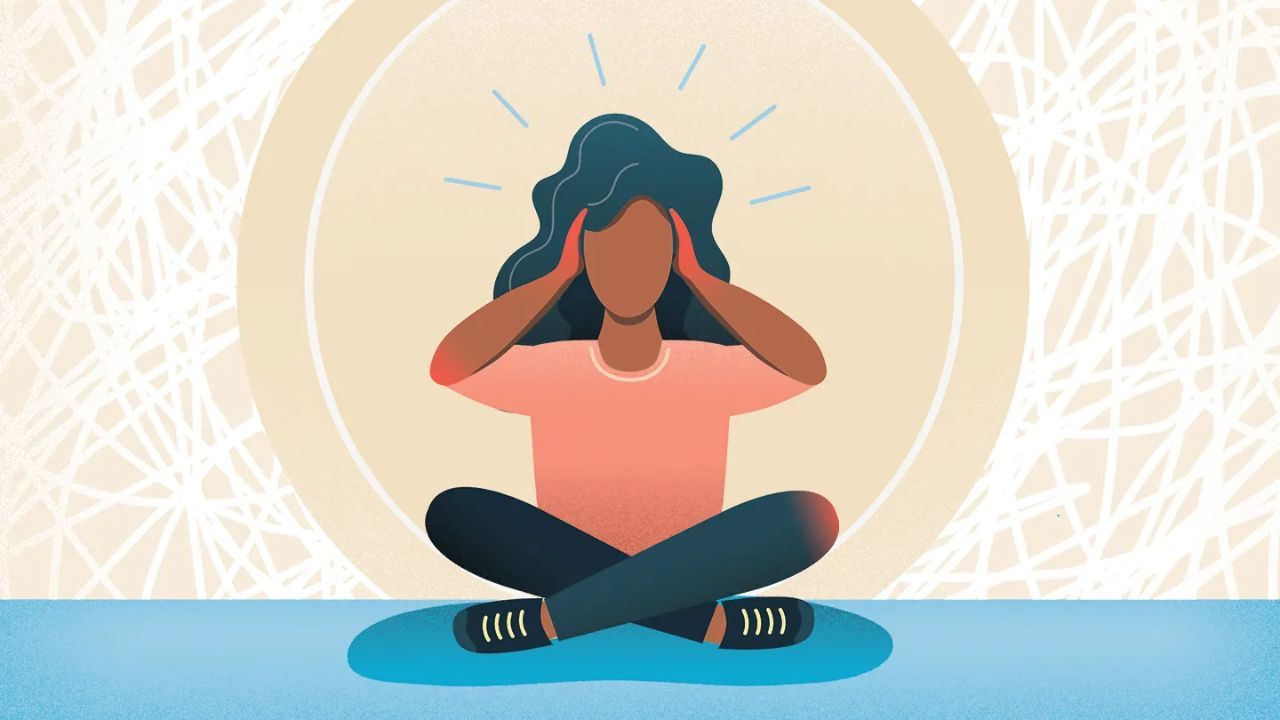
One-Minute Habits for Immediate Calm
One-minute habits work because they interrupt stress before it escalates. They are easy to repeat in public, at home, or at work without special tools.
These habits help your body shift out of tension and into steadier breathing and attention. You are not trying to fix your whole day in 60 seconds.

You are creating a pause that gives you more control over your next choice. Start with one habit and use it several times a day. Think of this level as one-minute stress relief you can access anytime.
The 2 Slow Exhale Reset for Fast Relief
This reset is simple and works well when you feel rushed or irritated. Inhale gently through your nose for about 3 seconds, then exhale slowly for about 6 seconds. Repeat that cycle 2 times and let your shoulders drop as you breathe out.
Longer exhales signal calm to your nervous system and reduce the urge to react. You can do it before a message, a meeting, or a difficult conversation. It is a reliable breathing technique for stress that lowers tension quickly.
The 5-4-3-2-1 Grounding Check for Quick Focus
Grounding helps when your mind is spinning or stuck in worry. Name 5 things you can see, 4 things you can feel, 3 things you can hear, 2 things you can smell, and 1 thing you can taste.
This pulls attention away from spiraling thoughts and back into the present. Keep your pace calm and do not rush to finish.
You can do it at your desk, in a car, or while waiting in line. It is a quick grounding exercise for anxiety that supports focus.
The Shoulder Drop and Jaw Release to Reduce Tension
Stress often shows up as tight shoulders, a clenched jaw, and shallow breathing. Lift your shoulders toward your ears, hold for 2 seconds, then drop them fully.
Unclench your jaw and rest your tongue gently on the roof of your mouth. Take one slow breath while keeping your face relaxed.
This small release reduces physical tension that feeds mental stress. Use it as a quick body check several times a day. It is a practical tension release habit that improves body awareness.
Five-Minute Habits That Prevent Stress Pileups
Five-minute habits prevent stress from stacking across the day. They are long enough to shift mood, energy, and attention, but short enough to fit busy schedules.

This level focuses on order, movement, and small recovery breaks. These habits help you stop carrying stress from one task into the next.
They also create small wins that support motivation. Choose one habit from this level and use it once or twice daily. The goal is five-minute stress reduction that stops buildup.
A 5-Minute Walk or Light Stretch to Reset Your System
Movement helps because it changes your body state and clears mental fog. Take a 5-minute walk outside if possible, or walk indoors and focus on steady breathing.
If walking is not possible, do gentle stretches for the neck, back, hips, and legs. Keep it light and comfortable, not intense or competitive.
Movement reduces the feeling of being trapped in a chair or in your head. Over time, this becomes a dependable daily movement for stress habit.
A Quick Desk or Room Reset to Reduce Visual Noise
Visual clutter can quietly increase stress by keeping your brain on alert. Spend 5 minutes clearing one small area, like your desk surface or a corner of a room.
Put away items that do not belong, wipe a surface, and set one item where it is easy to find. The goal is not perfect organization, only less friction.
A cleaner space makes tasks feel simpler and lowers background tension. This supports decluttering for mental health realistically.
A Simple “What Matters Next” List to Reduce Overwhelm
Overwhelm increases when you try to hold too many tasks in your mind. Write a short list with 3 items: what must happen today, what can wait, and what you can ignore. Then pick one next step you can complete in 10 minutes or less.
This reduces decision fatigue and turns vague pressure into action. Keep the list visible so you do not restart the stress loop. You are training your brain to prioritize instead of panic. This is a strong stress management habit for busy days.
Ten-Minute Habits That Improve Emotional Stability
Ten-minute habits help you process stress rather than carry it. This level supports emotional stability through closure, transitions, and simple self-care.

You are building skills that prevent daily stress from becoming chronic stress. Ten minutes is enough time to calm your body and also reduce mental noise.
These habits work especially well at the end of work or school, or before bedtime. Choose one habit from this level and practice it consistently. Think of this as emotional stability routines that create steadier days.
A Time-Limited Worry Note With a Clear Stop Point
Worry becomes stressful when it loops without action or closure. Set a timer for 10 minutes and write what you are worried about in plain words.
Then write one small action you can take, or write “no action today” if you cannot change it. End with a clear closing sentence, like “I will revisit this tomorrow at 5 pm.” This gives your brain a container instead of an endless loop.
The goal is not perfect answers, only clearer boundaries around worry. This is a helpful worry management habit for daily stress.
A Gentle After-Work Transition Routine That Signals Safety
Many people carry work stress into the evening because there is no clear transition. Create a 10-minute routine that marks the end of the day, like changing clothes, washing your face, and stretching lightly.
Put your phone on silent during the routine to reduce stimulation. Play calm music or sit in quiet for a moment to help your system downshift.
Then choose one small personal activity that feels restorative. This reduces emotional spillover and makes evenings calmer. It is a practical after-work routine for stress that supports recovery.
A Short Planning Check That Protects Tomorrow From Chaos
Stress often grows when tomorrow feels uncertain or unprepared. Spend 10 minutes listing your top 3 priorities for tomorrow and the first step for each. Check your calendar for time limits and add buffer time if possible.
Prepare one small thing tonight, like clothes, a bag, or a lunch plan. Stop when the plan is clear enough, not perfect. This habit reduces morning panic and makes you feel more capable. It is a simple planning habit for mental clarity that lowers daily pressure.
Strong Daily Habits That Keep Stress Lower Long Term
Strong daily habits increase your stress tolerance and protect your energy over time.

These habits are not extreme, but they are consistent and structured. They stabilize sleep, meals, movement, and boundaries, which are core pillars of emotional well-being.
This level works best after you have a few smaller habits in place. You do not need to do every habit in this level at once. Choose one strong habit and build it slowly. These are long-term stress reduction habits that raise resilience.
A Consistent Sleep Window and Evening Cutoffs
Sleep supports emotional control because your brain processes stress while you rest. Set a consistent sleep window by choosing a regular wake time and a regular bedtime range.
Create an evening cutoff for stimulating activities, like heavy work, intense discussions, or constant scrolling. Lower lights and choose calmer activities in the final hour before bed.
If you miss a night, return to the schedule the next day without punishment. Sleep consistency supports mood, patience, and focus throughout the day. This is a core sleep routine for stress strategy.
Stable Meal Timing and a Simple Balanced Snack Plan
Energy crashes often feel like anxiety, irritability, and low motivation. Stabilize meal timing by eating at predictable times most days.
Include protein and fiber so your body stays steady between meals. Keep a simple snack plan for busy days, like yogurt, nuts, or fruit with peanut butter.
Avoid relying on sugar spikes that lead to sharper crashes later. Stable fueling supports emotional steadiness and reduces stress reactivity. This is a practical nutrition habit for stress that fits everyday life.
Message and Notification Boundaries That Protect Attention
Digital overload increases stress because it keeps your brain in constant interruption mode. Turn off nonessential notifications and choose 2 or 3 times to check messages.
Use focus modes during work blocks and during evening recovery time. If you worry about missing something urgent, set one channel that can reach you.
Clear boundaries reduce the feeling of being on call all day. Over time, you feel calmer and more in control of your attention. This is a powerful digital boundary for stress habits.
Conclusion
Stress does not disappear, but your response to it can improve with practice. Start with simple habits that reduce daily stress that take 1 minute or 5 minutes. Build up to stronger habits only after the basics feel easy.
Use the ladder to prevent overload and create steady emotional routines. Choose habits that fit your schedule, not an ideal life. Repeat them for 14 days and adjust based on results. Small steps done consistently can create a calmer baseline over time.