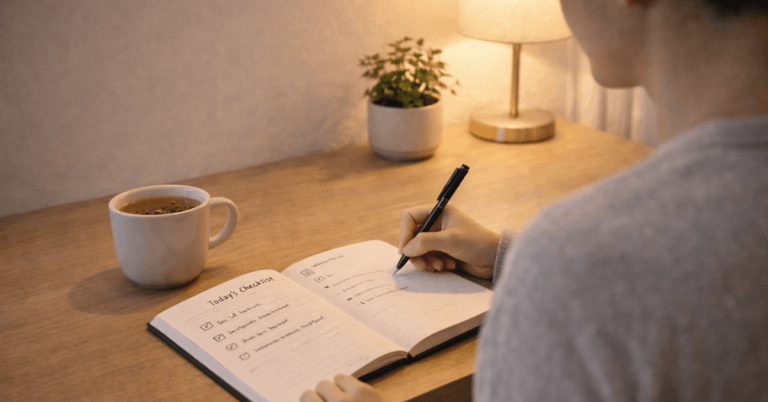
Better mental health rarely comes from one big change. Daily habits that support mental well-being can be simple, repeatable, and realistic. When you practice a few basics, your mood becomes steadier under stress.
This guide maps habits across a normal day, from morning to night. You will learn what to do in small windows, not long sessions. Each step is explained in plain language for beginners.
Morning Habits That Set Your Mood for the Day
Mornings shape momentum because your brain treats early cues as a forecast. A rushed start can raise stress sensitivity and make small problems feel bigger.
A steadier start supports focus, patience, and motivation through the day. Keep morning habits short so they work on low-energy days. Choose actions that wake your body and lower decision overload. You are building stability, not chasing a perfect morning.
A 3-Minute Calm Start Routine
Begin with a short reset before you check messages. Sit up, place both feet on the floor, and take 5 slow breaths. Notice one sensation, like air on your skin, to anchor attention.
Name the day with one word, like steady, focused, or kind. Choose one action you will do first, then start it. This pause reduces mental noise and helps you respond instead of react.
Morning Light and Fresh Air for Mood Stability
Natural light supports your body clock and makes daytime alertness smoother. Step outside for 5 to 10 minutes or sit by a bright window. Pair light with one action, like a short walk or stretching.
This boosts energy without extra caffeine or intense workouts. If you cannot go outside, open the curtains and face the brightest room. Consistent morning light supports a steadier mood and easier sleep.
One Intention for the Day, Not a Long List
Choose one intention that guides your choices without pressure. An intention is a direction, not a task list, so keep it short. Examples include being present, finishing one important thing, or speaking gently.
Write it on a note or set it as a phone reminder. When stress hits, return to the intention to regain perspective quickly today. This habit reduces scattered thinking and supports calmer priorities.
Midday Habits That Prevent Emotional Burnout
Midday is where stress quietly accumulates, especially when you stay in output mode. Small resets protect your nervous system and keep the mood from dropping.

A helpful midday routine does not require long breaks or special tools. The goal is to prevent overload before it becomes frustration or shutdown. Think in short check-ins that restore energy and release tension. These habits make the afternoon manageable.
Micro Breaks That Reset the Nervous System
Take a micro break every 60 to 90 minutes. Stand up, roll your shoulders, and unclench your jaw for 10 seconds. Look at a distant point to rest your eyes and attention.
Take one slow breath in and a longer breath out to signal calm. Return to your task with a clearer mind and fewer stress signals. Repeat this to reduce burnout and steady your mood.
Hydration and Balanced Lunch Timing
Dehydration and skipped meals can feel like anxiety and worsen mood swings. Sip water instead of drinking late in the day. Eat a balanced lunch with protein and fiber to keep energy stable.
Heavy or sugary lunches can cause crashes that feel like low motivation. If lunch is small, add a snack later, like nuts or fruit. Steady fueling supports mental well-being by keeping energy steady.
Message Boundaries That Reduce Reactivity
Constant notifications train your brain to stay on call, which raises stress. Set 2 or 3 times to check messages instead of reacting instantly. Turn off alerts and keep what you need.
If you must respond quickly for work, use a window, then silence again. Clear boundaries reduce resentment and help you stay emotionally regulated. Over time, you feel less pulled by urgency and more in control.
Afternoon Habits That Improve Focus and Emotional Control
Afternoons often bring decision fatigue, lower patience, and more mental clutter. This is when structure matters because willpower is already used up.
Protect focus by reducing choices and creating clear finish lines today. Emotional control improves when you reduce multitasking and build small wins each day.
Keep habits measurable and repeatable, so they stick on busy days. These steps support confidence because progress becomes visible.
One Focus Block With a Clear Finish Line
Pick one task and set a finish line you can reach in 25 to 45 minutes. Close tabs, silence alerts, and keep what you need. Start with the smallest step, like opening the file or writing the first line.
If you get stuck, write the next action as one sentence. When the block ends, stop and mark what you finished. Calm focus grows because your brain truststhat there is an end.
A Quick Mental Declutter List
When your mind feels crowded, dump thoughts onto paper or a note. Write worries, reminders, and open loops without organizing them yet. Circle one item you can do in under 5 minutes and do it.
Cross it off to signal closure and reduce mental pressure. Move the remaining items into your task list later. This habit reduces anxiety because it stops looping and creates clear next steps.
Evening Habits That Reduce Stress and Help You Recover
Evenings are your recovery window, not a second workday. When you rush through the evening, stress carries into the night.

A few simple habits can lower mental noise and restore a sense of control. Focus on transitioning out of performance mode and into restoration.
Choose activities that feel calming instead of stimulating. The point is to end the day with less tension than you started.
A Low Stimulation Transition After Work or School
Create a short transition ritual that separates daytime demands from personal time. Change clothes, wash your face, or take a shower to signal a shift. Put your phone on silent for 20 minutes so your mind can downshift.
Do one light task, like tidying a surface, to create order. Then choose an activity, like reading or gentle stretching. This transition supports balance by lowering stress.
Simple Reflection That Closes Open Loops
Reflection helps when your mind replays the day and searches for unfinished business. Take 5 minutes to write what went well and what needs attention tomorrow. Keep it factual and short, not a long analysis.
Choose one lesson, like slow down, ask for help, or take breaks. List the top 3 tasks for tomorrow and stop there. This habit reduces rumination because your brain receives a plan.
Night Habits for Emotional Closure and a Better Tomorrow
Night habits matter because emotions feel louder when you are tired and overstimulated.

If your night is chaotic, worries can expand and feel more intense. A stable routine creates closure and reduces the urge to scroll or self-criticize.
Keep your steps simple and repeat them in the same order most nights. The goal is to protect rest and make tomorrow easier. Calmer nights support steadier mornings.
Prep Tomorrow in 10 Minutes
A short prep routine reduces morning stress and prevents rushed decisions. Lay out clothes, pack what you need, and set out essentials. Write your top 3 priorities on paper so you do not wake up guessing.
If something feels unclear, add one first step next to it. Keep prep under 10 minutes so it stays sustainable on nights. This habit supports mental well-being by replacing uncertainty with a plan.
Phone Boundaries That Protect Your Mind
Phones can pull you into comparison, conflict, or endless information at night. Set a boundary like no feeds in bed and no news late at night. Charge your phone away from the bed if you can and use an alarm.
If you need a screen, choose stimulation content and set a timer. Replace scrolling with reading, soft music, or breathing. This reduces anxiety by preventing late emotional spikes and overload.
Conclusion
If you miss a day, restart the next one without a long self-review. Consistency grows from returning, not from never slipping. If your mood stays low or anxiety disrupts daily life, consider professional support.
Talking to a counselor or doctor can be a strong, practical step. Daily habits help, but you do not have to do everything alone. Use these routines as support while you build a healthier baseline.