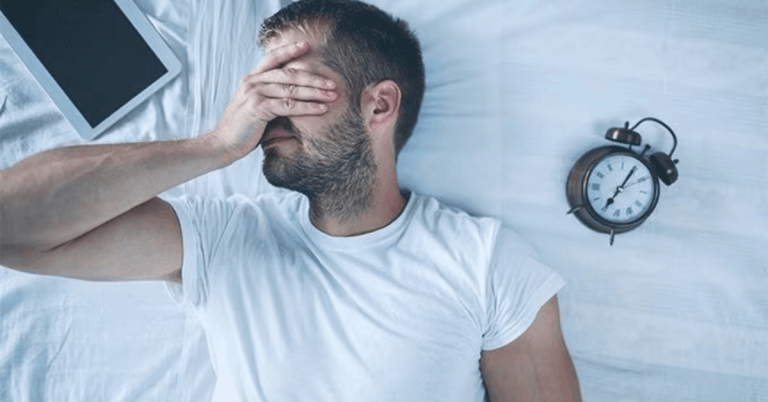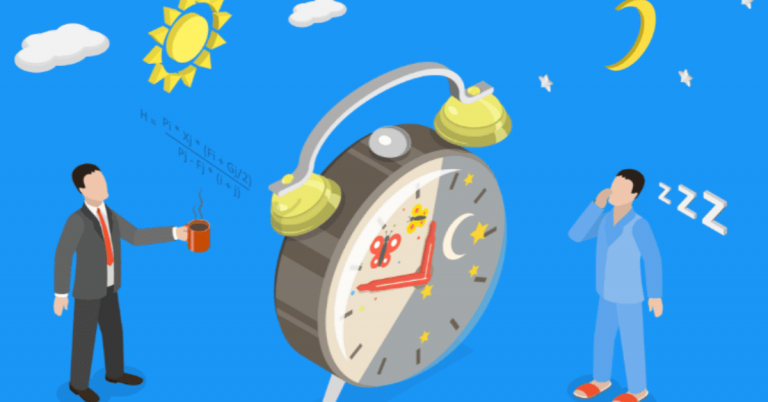
Most sleep problems begin before lights go out. Evening habits that support better sleep help your brain downshift. If you are new, small changes can feel surprisingly powerful. Better nights usually come from fewer inputs, not more effort.
You will learn what keeps you awake and why it happens. You will practice calming steps that take only minutes. You will adjust food, drinks, and timing for steadier sleep. You will also set simple screen rules that protect bedtime.
What Keeps You Awake at Night
Your mind and body need a transition period each night. When stress, light, or stimulation stays high, sleep readiness stays low.

You may feel tired but still alert, which makes bedtime frustrating. The goal is to spot the blocker that is strongest for you.
Then you lower it with a habit that signals safety clearly. Start with the common causes below and keep the approach simple.

Racing Thoughts and Unfinished Mental Loops
Racing thoughts often come from unfinished tasks and unresolved emotions. At night, quiet makes the mind review what you did not complete. The loop feels like problem-solving, but it rarely produces action.
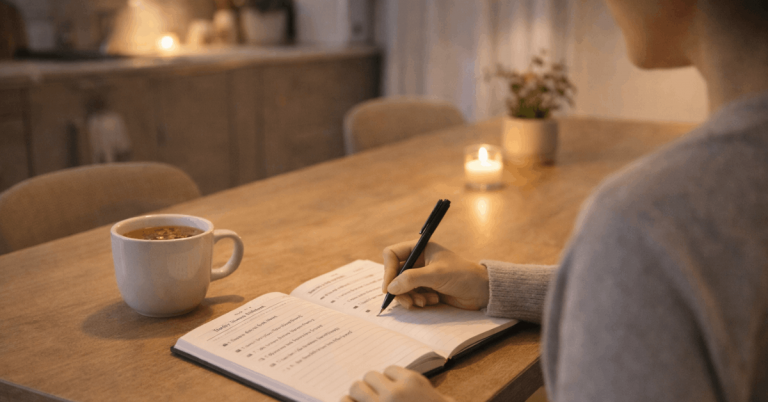
Write 3 bullets for tomorrow, then stop and close the notebook. This tells your brain the issue has a place and a time. With the loop contained, your body can relax more easily.
Stress Chemistry and a Body in High Alert
When your nervous system is on high alert, sleep becomes lighter and choppy. Stress hormones keep heart rate and breathing slightly elevated. You may notice tight shoulders, jaw tension, or a restless stomach.
Calming habits help because they reduce arousal before you enter bed. Warm lighting, slow breathing, and gentle movement signal real safety. Over time, your body learns to respond faster to these cues.
Sleep Pressure, Timing, and Irregular Schedules
Sleep pressure builds across the day and supports deeper sleep at night. Late naps, long lie-ins, and irregular wake times weaken that pressure. Then bedtime arrives and your body is not fully ready to sleep.
Choose a wake time you can keep on most days, including weekends. If you nap, keep it early and short, around 20 minutes. A steadier rhythm makes the evening routine work better.
Stimulation From Late Activity and Bright Environments
Bright environments and intense evening activity can delay sleep onset. Fast videos, heated talks, and hard workouts keep the brain in go mode. Strong overhead lighting also tells your body it is still daytime.
Shift the final hour into low-stimulation choices whenever possible. Use warmer lamps, quieter content, and slower movement to downshift. That creates a smoother bridge between your day and your sleep.
Calming Habits That Set the Stage for Sleep
Once you know the blockers, add calming habits that reduce them. The best routine is short, repeatable, and easy to start when tired.

Think of it as training, because sleep responds to consistency. Choose 2 or 3 habits and do them in the same order most nights.
When the pattern repeats, your brain starts to predict rest. That prediction lowers tension and helps sleep arrive more naturally.
Breath and Body Relaxation in 3 Minutes
A 3-minute breathing reset can quickly and safely lower arousal. Inhale through your nose for 4 seconds, then exhale for 6 seconds. Repeat about 12 cycles and keep your shoulders soft and low.
The longer exhale activates a calming response in your body. If thoughts interrupt, return to counting without judging yourself. Finish by noticing one relaxed area, like your jaw or hands, now.
Gentle Stretching and Muscle Release
Gentle stretching helps because many people carry stress in their muscles. Focus on the neck, hips, calves, and lower back for a short sequence. Move slowly, avoid pain, and pair each stretch with a slow exhale.
This is not an exercise, it is a release that reduces physical restlessness. If you prefer, try progressive muscle relaxation from feet to face. When the body softens, the mind often becomes quieter too.
A Worry Parking Lot to Clear the Mind
A worry parking lot clears mental clutter without turning into overthinking. Write 3 worries, then write one next step for each in one line. If there is no action tonight, write “not solvable now” and move on.
This closes loops and reduces replaying in bed. Keep the note beside your bed, then stop writing after 5 minutes. You are creating closure, not starting a deeper analysis session.
The Close, Calm, Cue Routine
A simple routine can be remembered as close, calm, and cue. Close the day by ending work, laying out tomorrow’s first item, and tidying. Calm your body with a few minutes of breathing or stretching.
Cue sleep by dimming lights, lowering noise, and entering the bedroom intentionally. Do the steps in the same order to build a reliable association. Within 1 to 2 weeks, many beginners notice easier sleep onset.
Food, Drinks, and Timing in the Evening
Food and drink choices can either support sleep or fight against it. The goal is stable energy without heavy digestion or stimulants near bedtime.

Even small timing shifts can reduce night awakenings and morning grogginess. Start with caffeine, then look at dinner size, sugar, and alcohol.
You do not need strict rules, just consistent patterns most nights. Use the guidelines below and adjust based on your own response.
Caffeine Cutoff and Hydration Balance
Caffeine can stay active for many hours, even if you feel fine. A practical cutoff is 8 hours before bedtime, then adjust for sensitivity. If you drink caffeine late, you may fall asleep but wake more often.
Hydration matters too, because dehydration can raise heart rate and discomfort. Drink water earlier in the evening, then taper large drinks near bed. This balance supports comfort without extra bathroom trips.
Light Dinner and Snack Choices That Help
A heavy meal can raise body temperature and keep digestion working late. Aim for a lighter dinner with protein, fiber, and easy carbs. If you need a snack, keep it small and steady, like yogurt or nuts.
Avoid very spicy or greasy foods if they trigger reflux or discomfort. Try to finish eating 2 to 3 hours before bed when possible. A calmer stomach often leads to smoother, deeper sleep.
Alcohol and Sugar: Why Sleep Feels Worse After Them
Alcohol may make you sleepy, but it often disrupts sleep later in the night. It can increase awakenings and reduce restorative sleep stages. Sugar can also create a spike and drop that feels like restlessness.
If you drink, keep it earlier, keep it moderate, and add water. If you want dessert, choose a smaller portion and stop earlier. These adjustments protect sleep continuity without feeling restrictive.
Late-Night Snacking and Reflux Triggers
Late-night snacking can become a habit when evenings feel like personal time. The downside is reflux risk and a body that stays busy digesting. Even mild discomfort can trigger micro-awakenings you do not remember.
If hunger shows up, choose a low-acid snack and keep the portion small. If cravings drive you, check whether you ate enough at dinner. A steady evening pattern reduces late snacking over time.
Screen Habits and Mental Input Rules
Screens affect sleep because they combine light with emotional input. Fast content keeps attention scanning and makes your brain expect stimulation.
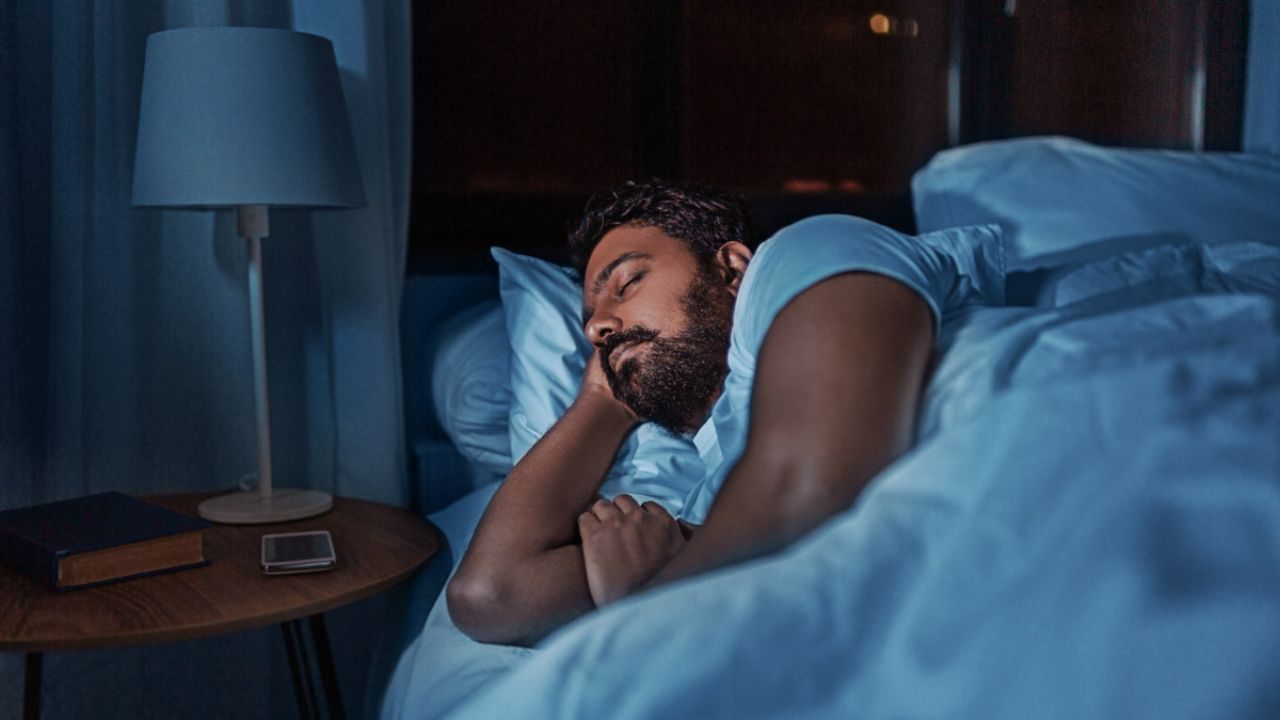
You do not need to quit screens completely, but you need a step-down plan. The goal is to reduce intensity as bedtime approaches, not to be perfect.
Start by removing big triggers, such as news and endless scrolling. Then replace them with calmer choices that still feel enjoyable.
The 60-Minute Screen Step-Down
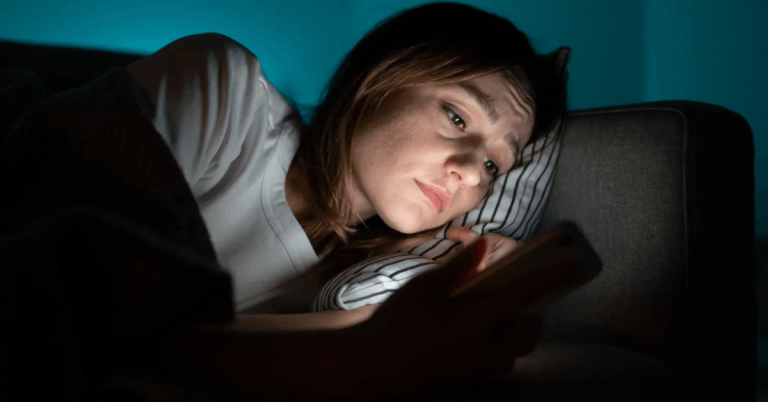
A screen step-down reduces stimulation in stages rather than all at once. Lower brightness, turn off autoplay, and switch to slower content first. Then aim to stop phone scrolling 30 to 60 minutes before bed.
Use that window for your close, calm, cue routine and quieter activities. If you must use a device, choose audio or reading over rapid video. This approach helps your mind separate entertainment from sleep.
Notifications, News, and Comparison Triggers
Notifications create urgency, and urgency works against sleep readiness. News and social feeds can trigger worry, anger, or comparison at night. Those emotions can linger after you put the phone down.
Use Do Not Disturb and remove nonessential alerts during evening hours. Check messages earlier, then protect the last hour from new inputs. A calmer emotional tone makes falling asleep much easier for most people.
Replacement Activities That Actually Relax You
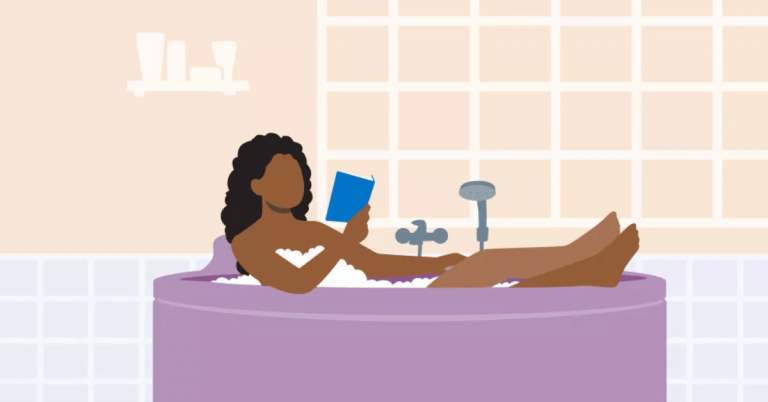
Replacing screens works when the alternative feels simple and comforting. Try a warm shower, light stretching, or a paper book you actually like. Quiet hobbies, calm music, or gentle journaling can also help you unwind.
Keep the activity low-effort so it does not feel like another task. Use a dim lamp and keep the room quieter as bedtime gets closer. Over time, these replacements become strong cues for sleep.
Conclusion
Better sleep comes from a calmer runway, not an overhaul. Evening habits that support better sleep, lower stimulation, and build predictability. Start tonight with one calming habit, like breathing or a short stretch.
Cut one disruptor, such as late scrolling, heavy food, or late caffeine. Repeat for 7 nights, noting sleep onset and wake-ups. If sleep stays difficult, consider talking with a qualified health professional.