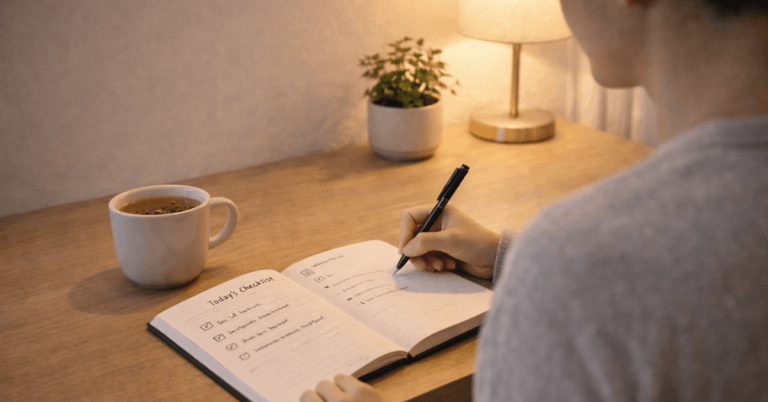
Emotional strength comes from what you repeat, not what you promise. Many readers explore daily habits that support emotional strength when stress starts shaping sleep and mood. A routine can train your brain to pause instead of react.
This guide uses a simple habit swap method. You will learn how to spot triggers early. You will practice replacements that fit busy schedules. You will also build safeguards for hard weeks. The goal is steady recovery, not perfect days.
The Habit Loop Behind Emotional Strength
Emotional strength improves when your actions follow a predictable loop each day. A loop has a trigger, a routine, and a reward, and it runs automatically.

Habit loop basics explain why change feels hard during stress. You do not delete the loop; you reshape it. Keep the trigger, swap the routine, and protect the reward. When the reward stays, your brain accepts the new pattern.
The Trigger, Routine, and Reward You Can Actually Change
A trigger is the cue that starts the loop, like tension or boredom. The routine is the behavior you do next, like scrolling or snapping. The reward is the payoff, such as relief or control.

Trigger routine reward mapping turns a vague urge into a clear sequence. Write 1 loop each day for 1 week. Patterns repeat by time, place, and emotion. Those repeats are your targets.
Why Stress Pulls You Back to Old Patterns
Stress pushes your brain toward speed and certainty, so old routines return fast. When you are tired, your mind chooses what is familiar, not what is wise. Stress-powered autopilot can show up as irritability, avoidance, or late-night stimulation.
The habit is a signal that you need recovery, not shame. If you add pauses and basic care, urges soften. Then, swaps become easier to use.
The 2-Minute Swap Principle
Swaps work better than bans because your brain still wants a payoff. If a habit gives comfort, the replacement must also give comfort. Replacement over removal keeps the loop alive while improving results.
Choose a swap that takes under 2 minutes and feels natural. Practice it when calm so it is available when upset. Repetition teaches your body a steadier default response in stressful moments.
Find Your Hidden Triggers Before They Find You
You cannot replace a habit until you know when it appears each day. Triggers often cluster around body strain, time pressure, and digital overload.

Real-time trigger awareness helps you catch the cue before the reaction. You are collecting data, not criticizing yourself.
Track what happens right before the habit, then name the payoff. Once the cue is clear, you can plan a better routine.
Body State Triggers: Sleep, Food, and Hydration
Fatigue, hunger, and dehydration reduce patience and raise emotional intensity quickly. When your body runs low, small problems feel urgent. Body state triggers often show up as snacking, rushing, or snapping at others.
Track sleep hours and meal timing for 5 days. Compare those notes to mood swings. Add water and a planned snack before your usual slump. Improving basics often reduces the habit without extra effort.
Time Pressure Triggers: Urgency and Overbooking
Time pressure creates urgency that makes you skip breaks and safety checks. Under urgency, you multitask, interrupt, and react faster. Urgency cue detection starts when you notice the thought, I do not have time.
Build a brief buffer between tasks when possible, even just 5 minutes. If not, use a 30-second breath reset at transitions. That micro buffer reduces stress and protects emotional control.
Attention Triggers: Digital Noise and Constant Checking
Digital input keeps attention fragmented and emotions closer to the surface. Notifications and fast content train your brain to seek more stimulation. Attention overload cues include restlessness, comparison, and sudden anxiety.
Set fixed check-in times for messages and social apps. Turn off nonessential alerts and badges. Keep your phone away during meals and the last hour before bed. Lower input makes calmer choices easier.
Replace Unhelpful Patterns With Better Defaults
Once you know triggers, the next step is a swap that fits life. A good replacement is small and tied to the same cue. Practical swap design focuses on the benefit you want, like relief or control.

Pick 1 trigger you meet often. Choose 1 replacement you can finish quickly. Remove friction so the swap becomes the easiest option. Start with 1 swap and practice it daily.
The Pause Swap for Calmer Responses
For emotional regulation, replace a reaction with a short pause. Inhale, exhale, then name the feeling in 1 word, and notice your body. Pause before reacting creates choice without denying emotion.
If you need time, say you will respond after you think. This protects relationships and reduces regret. Practice the pause during stress at home or work, not only in conflict. With repetition, the pause becomes automatic.
The Next-Step Swap for Mental Organization
For mental organization, replace rumination with thought offloading and 1 next step. Write the worry, then write a small action you can do today. Thought sorting routine reduces mental noise because your brain sees a plan.
Keep the list to 3 items to avoid overload. If the worry returns, point yourself back to the next step. This turns anxiety into structure.
The Micro Self-Care Swap That Survives Busy Days
To support self-care, replace all-or-nothing plans with a small action you can finish now. Choose 1 option: stretch, drink water, or step outside for 1 minute. Micro self-care swap builds emotional strength because it proves you can help yourself quickly.
Link it to a trigger like finishing a task. Keep it short so it survives busy days. Over time, escape urges become reset urges.
The Wind-Down Swap That Protects Sleep
For sleep support, replace late stimulation with a consistent wind-down cue. Dim lights, wash up, and end scrolling, then do a calm activity. Sleep protecting cues signal safety and help your body shift into rest.
Keep bedtime within a steady window most nights. If you must use a screen, lower the brightness and avoid stressful topics. Consistent evenings improve sleep depth. Better sleep supports emotional control tomorrow.
Build a Daily Rhythm That Holds Under Stress
Daily reinforcement works best when it sits at clear points in your day. A morning anchor, a midday reset, and an evening cue create rhythm. Daily rhythm reinforcement reduces decision fatigue when tired.

These practices are short, but they compound over weeks. They also give you a plan when stress spikes. Start with one practice, then add another after it feels stable. Reliability is the point.
A Morning Anchor That Starts the Day Steady
A morning anchor sets your baseline before noise and demands build. Drink water, get daylight, and choose one priority to finish. Morning stability anchor lowers chaos and helps you feel in control.
Keep the steps under 3 minutes on rushed mornings. Do not aim for a perfect routine; aim for a repeatable one. A calmer start often leads to fewer emotional spikes later. That stability supports sleep.
A Midday Reset That Stops Stress From Stacking
A midday reset prevents stress from stacking until evening. After a work block, stand up, stretch, and take 10 slow breaths. Midday nervous system reset releases tension and improves focus.
If you can, take a short walk or change rooms. Drink water to support your body’s state. This routine is small, but it protects emotional energy. Lighter afternoons often lead to calmer evenings for you.
Keep Progress When Life Gets Messy
Old habits return when stress rises, and shortcuts feel easy. Prevention is not perfection; it is recovery and setup. Relapse prevention skills include a minimum routine, cue control, and reviews.
You plan for tired days, not hoping they do not happen. When you protect cues, you protect progress. This section shows how to stay consistent through hard weeks. Small safeguards keep the stronger loop alive.
The Minimum Routine for Hard Weeks
On busy days, use a minimum routine that keeps foundations intact. Keep sleep timing steady, eat one balanced meal, and do one 2-minute reset. Minimum effective routine prevents total depletion and reduces emotional reactivity.
If you miss a habit, return the next day with the smallest version. Avoid punishment plans that add pressure. Consistency grows when routines survive imperfect weeks. A small win supports better choices tomorrow.
Environment Tweaks and Weekly Reviews
Change your environment so habits are easy and old habits have friction. Turn off alerts, keep calming tools visible, and move cues away. Environment-driven consistency works because cues guide behavior before you decide.
Do a short weekly review to see what slipped and why. Adjust one cue, not your plan. If stress is higher, simplify the routine rather than quitting it. Small tweaks prevent relapse.
Conclusion
Emotional strength is built in moments, not in breakthroughs. If you want daily habits that support emotional strength, start by mapping one trigger and its payoff. Install one swap that matches the benefit and takes less time.
Reinforce it with a morning anchor, a midday reset, and an evening recovery cue. Protect progress with a minimum routine and a weekly review. With repetition, the stronger habit loop becomes your default.